
Constipation + the Gut Microbiome: The Hidden Cause and How to Restore Balance
Constipation is more than “not going enough.” It’s defined as fewer than three bowel movements a week, often with hard or difficult-to-pass stools, plus symptoms like bloating or straining (NIDDK, 2022).
While fiber and bathroom habits matter, they’re not the whole story. Your gut microbiome, and the signals it sends to your gut, also helps regulate movement, and disrupted signaling can slow things down.
Constipation: The Usual Culprits
Several everyday factors can slow down your digestive system:
Low fiber intake
Inactivity
Regularly ignoring the urge to go
Medications such as certain pain relievers, antacids, or antidepressants
Life changes like travel, pregnancy, aging, or surgery
Medical conditions including neurological or hormonal disorders
For many people, constipation results from a combination of these factors happening at once. But scientists are now discovering that another, less obvious factor may also play a role: the way your gut microbiome sends signal throughout the body.
Your Gut Microbiome’s Signaling Role
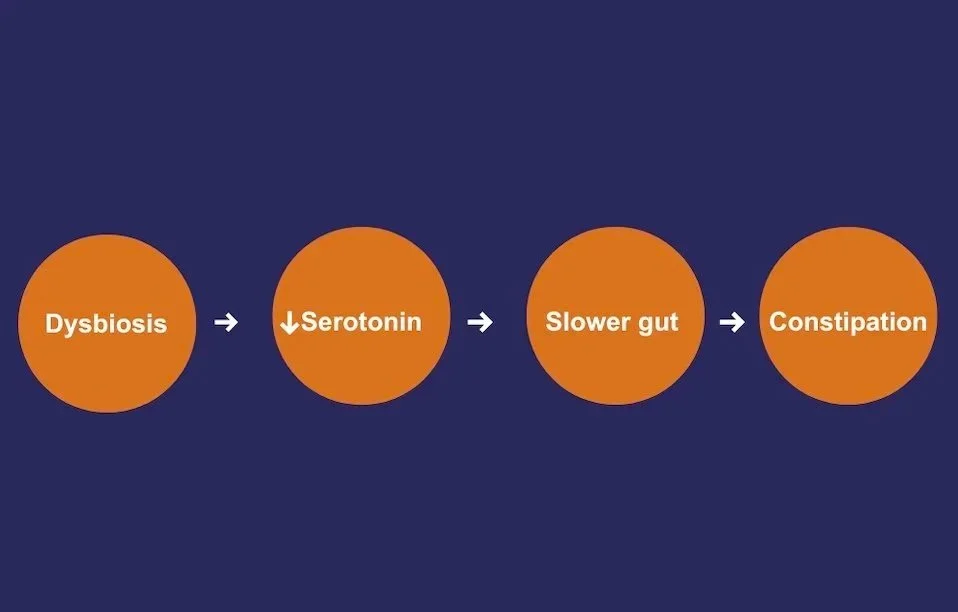
Your gut microbiome, trillions of bacteria that influence digestion and gut–brain signaling, plays a major role in how fast or slow your gut moves. When this community becomes imbalanced (dysbiosis), it can lower serotonin production in the gut, a key messenger that helps keep things moving. The chain reaction is simple: Dysbiosis → ↓ Serotonin → Slower gut → Constipation. Even with what you consider good habits, your gut bacteria may still be steering your digestion and gut–brain communication. What disrupts your serotonin:
Fewer serotonin-boosting bacteria (some gut microbes help make or trigger serotonin release).
More inflammatory microbes, which can irritate the gut lining and disrupt serotonin signaling.
Reduced production of short-chain fatty acids (SCFAs), which normally help stimulate serotonin.
Slower gut motility, which creates a feedback loop. Slow movement leads to less serotonin, which slows things down even more.
Restoring Your Gut Microbiome
The good news is that you can support your gut so it naturally improves motility over time by making a few simple changes.
Eat more prebiotic fiber (beans, oats, onions, garlic, bananas, asparagus) to feed serotonin-supportive bacteria.
Include fermented foods (yogurt, kefir, kimchi, sauerkraut) to boost beneficial microbes.
Increase polyphenol-rich foods (berries, olive oil, cocoa, green tea), which help beneficial bacteria grow.
Stay consistently hydrated, which supports normal motility.
Regular movement such as walking, stretching to stimulate the gut.
Manage stress, since stress disrupts both the microbiome and gut–brain signaling.
Microbiome Diversity: Your Foundation for Long-Term Wellness
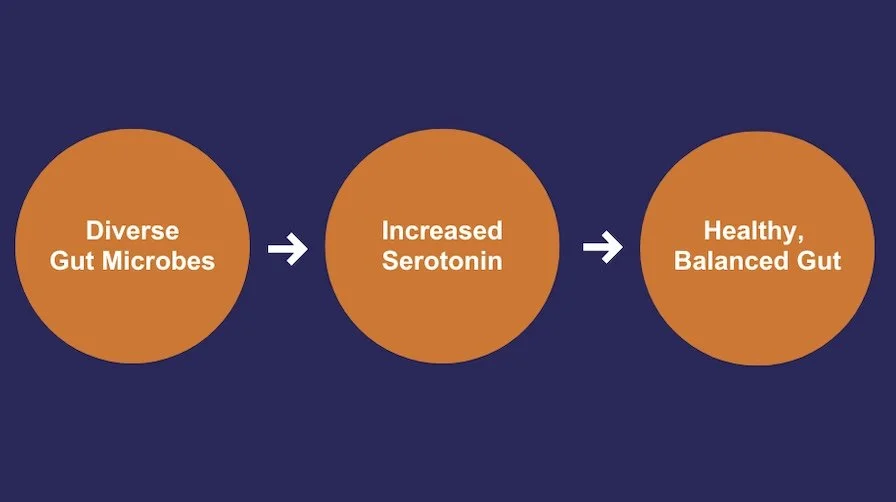
Constipation doesn’t come from just one cause. Growing research shows that your gut microbiome and its signaling system play a powerful role in how smoothly your gut moves. If you’re feeling backed up, bloated, or just “off” despite doing everything right, your microbes may be part of the story. By nourishing a healthier microbiome, you support better serotonin signaling, stronger gut–brain communication, and more natural, long-term digestive balance.
Sources:
NIDDK. Constipation. National Institute of Diabetes and Digestive and Kidney Diseases. https://www.niddk.nih.gov/health-information/digestive-diseases/constipation
PMC5583244. Dysbiosis contributes to chronic constipation development via regulation of serotonin transporter in the intestine. https://www.ncbi.nlm.nih.gov/pmc/articles/PMC5583244/
